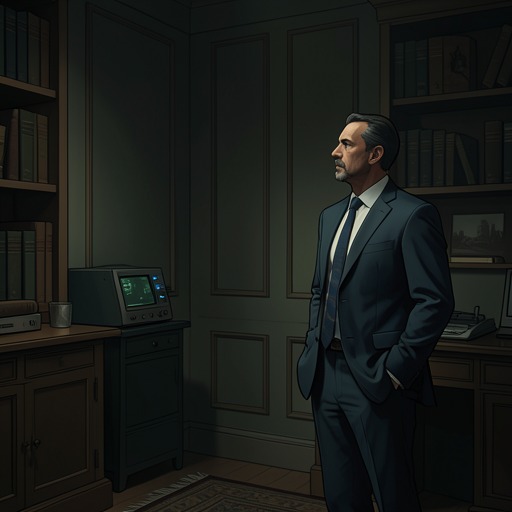
Rusty Conceals the Truth That Barbara Killed Carolyn
Presumed InnocentRusty Conceals the Truth That Barbara Killed Carolyn describes Rusty Sabich’s decision to withhold his belief that Barbara Sabich killed Carolyn Polhemus, even when the truth might have helped explain the case against him. He believes Barbara acted and regrets it, but refuses to turn that knowledge into an accusation. His silence protects neither their marriage nor his own reputation; it is a choice shaped by his concern for Nathaniel Sabich and by his refusal to make his son bear another loss.
A refusal to expose Barbara
In his conversation with Dan Lipranzer, Rusty does not treat Barbara’s guilt as an open question. He says he believes two things: Barbara killed Carolyn, and Barbara was sorry. The certainty of the first belief does not cancel the importance of the second. Rusty cannot know or prove what Barbara felt beyond his conviction, but he says he will always believe she regretted what she had done. His account holds the act and the remorse together instead of allowing either to erase the other.
Lipranzer presses him on whether he wants to see Barbara punished. Rusty slowly shakes his head and says he could not do that to Nathaniel. The refusal is not presented as a public defense of Barbara’s innocence: Rusty has already acknowledged to Lipranzer that he believes she did it. Rather, he will not become the person who sends his son’s mother toward ruin. He says the family has endured enough and that he cannot bear to inflict more on Nathaniel. His decision places a limit on what he is willing to do with the truth, even when that truth concerns a murder.
Nathaniel and the cost of disclosure
Rusty’s concern is specifically about the bond between Barbara and Nathaniel. Asked whether he worries about the child being with her, he answers that he does not. He believes Barbara is in better shape with Nathaniel around, because the child pulls her back, and that she needs someone who genuinely cares for her. In Rusty’s view, Nathaniel does care. The mother-son relationship is therefore not merely a reason to avoid disclosure; it is also something Rusty believes helps sustain Barbara.
He says he had always known he could not separate them, because doing so would be the worst thing he could do to either of them. This conviction makes his silence more than a tactical choice about the murder case. Even after the marriage has fractured—Lipranzer’s remark refers to Rusty having thrown Barbara out—Rusty distinguishes his anger or estrangement from what he believes Nathaniel needs. He can condemn Barbara’s act in his own mind without treating the child’s attachment to her as something he has the right to destroy.
Silence before his lawyers
Rusty says he did not tell either of his lawyers what he believed. Near the end of the case, Alejandro Stern had discussed putting Barbara on the stand, but Rusty sensed that Stern did not genuinely intend to do it. Jamie Kemp, the younger lawyer, had also noticed that something was wrong with the telephone records. Rusty registers these hints of suspicion, yet does not turn them into an invitation to investigate Barbara or make her a witness.
His reason is not that he considers disclosure a reliable way to clear himself. He would not put Stern or Kemp in the position of having to choose between Rusty and his wife, and he does not want his defense to depend on taking Nathaniel’s mother from him. He also concludes that an accusation would not hold up. In his account, Barbara would have understood the danger as well: if she had worked out the truth, she could see how readily the prosecution might recast the accusation against Rusty.
The accusation turned back on Rusty
Rusty lays out the counterargument he believes Nico Delia Guardia could have made if Rusty had accused Barbara. The prosecution could describe the murder as a perfect crime committed by a prosecutor who understood the system: a man in an unhappy marriage, hostile to Carolyn and resentful of his wife, but devoted to his son and afraid of losing custody if the marriage ended. On that account, the apparent case against Barbara would itself be part of Rusty’s plan.
The supposed details of such a frame would make the theory more persuasive, not less. Rusty imagines Nico arguing that he could have arranged for Barbara’s fingerprint to appear on the glass or for spermicide to be injected, then positioned her as a fallback suspect in case the larger scheme collapsed. Rusty acknowledges that some juries might accept that story. This is a counterfactual defense argument, not evidence that Rusty actually planted those clues or used Barbara as a scapegoat. Its force lies in the way his professional knowledge and private circumstances could make the truth he wanted to tell sound like another calculated lie.
Belief, doubt, and the decision to remain silent
Rusty admits that he had not always trusted his own conclusion. Looking back, he recalls moments when he thought Tommy Molto had set him up, and even wondered whether the idea that Barbara was responsible was part of Molto’s scheme. When the truth finally became clear to him, however, he says he was not surprised. That sequence preserves the doubt and self-questioning that preceded his acceptance without weakening the decision he makes once he believes he knows what happened.
Lipranzer had himself suspected Rusty only shortly before this exchange. Rusty reminds him of that reversal, then says that telling the lawyers would never have done him any good. The disclosure would not have guaranteed belief, acquittal, or justice; it would have exposed Barbara, placed the lawyers in an impossible position, and risked separating Nathaniel from his mother. Rusty remains alone in the kitchen as the conversation reaches this impasse. He does not claim that silence solves the murder or repairs the family. It leaves him carrying a private certainty that cannot safely become either a public accusation or a defense.